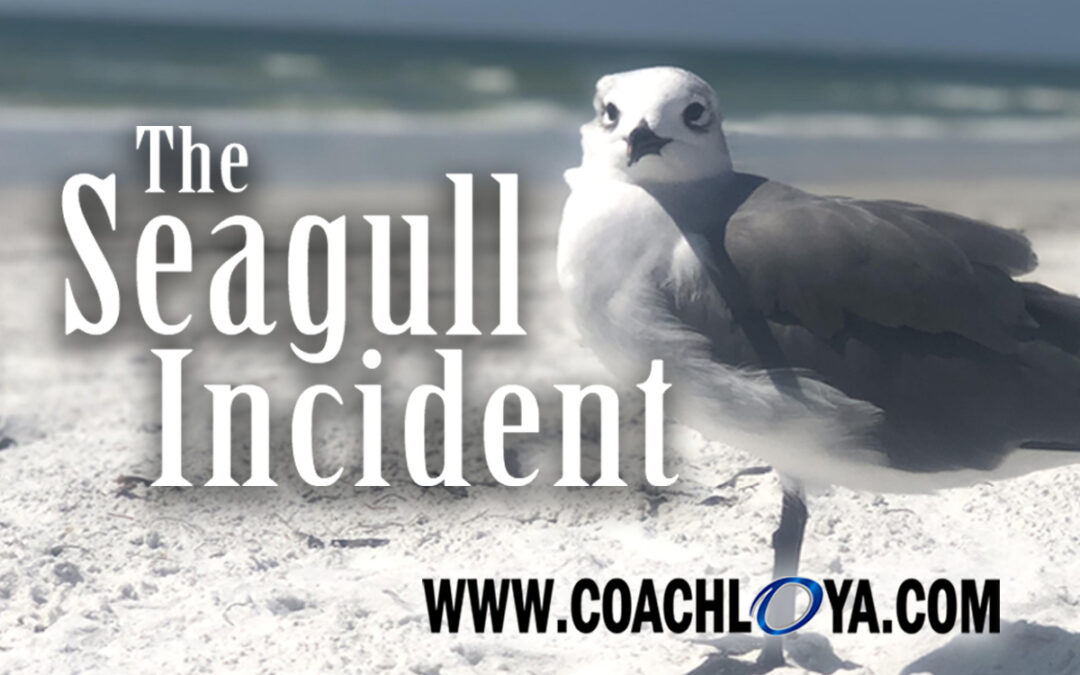
With my daughters heading back to school, we decided to make one last trip to the beach this past weekend before their summer break comes to an end.
Given that we live in central Florida and are conveniently mere miles away from some of the best beaches in America, I am aware of how that opening sentence could be perceived as silly, if not downright absurd.
We go to the “beaches” all the time. They’re close, convenient, and considerably fun. But with one of my daughters set to start her senior year of high school and all our schedules about to get busy, this trip to the beach really did feel like one final hurrah.
Some of my favorite memories have come from beach days. We have our routine down. Before heading out to the beach, we grab sandwiches from one of our favorite sub shops and eat on the beach while the waves crash in front of us.
Usually, this is a rather tranquil experience—usually.
As we sat down in our chairs and removed our sandwiches from their wrappers, my daughter mentioned how much she was looking forward to hers. When she lifted her sandwich to take her first bite, a large seagull swooped in and snatched the entire sandwich right out of her hands.
The incident offers two important good-teammate lessons.
Shocked by what had happened, my soon-to-be eighteen-year-old daughter stood motionless for a moment and then began to cry like a child. She was clearly flustered, disappointed, angry, and starting to panic.
While those emotional responses may be understandable, they are not in keeping with how a good teammate handles misfortune.
Good teammates don’t panic in these situations. They don’t waste their energy fretting about what happened; they focus their energy on what happens next.
In this situation, the sandwich is gone. The few pieces the seagull dropped are now covered in sand and no longer edible. Crying, pouting, and stomping your feet will not change this situation. They will only delay any possible path forward.
Her sandwich could have tasted delicious. Eating it could have been the start of a perfect beach day. But that is no longer a possibility.
When good teammates encounter unexpected, unwanted changes, they don’t dwell on what could have been. They immediately establish the parameters of the situation. What’s the best possible outcome? What’s the worst possible outcome?
The best possible outcome would be that a friendly nearby beachgoer who witnessed what happened offers her an extra sandwich that is identical to the one that was stolen. That outcome would be ideal.
The worst possible outcome would not be that she has to go hungry. It would be that we have to drive back to the sub shop and order another sandwich or walk to the nearby concession stand and have her settle for a different sandwich. Sure, those options would be inconvenient, but they wouldn’t be the end of the world.
Everything within those parameters is manageable.
Panicking and pouting in response to misfortune alters the vibe on your team. It distracts you from concentrating on what’s best for your team and makes it harder for everyone else to do the same.
How you respond to misfortune (e.g., changes in status, role, or health) reveals a lot about the kind of teammate you are, as does how you respond to good fortune.
The second good-teammate lesson comes from the seagull itself.
After the seagull stole my daughter’s sandwich he landed several feet away and started to eat. Dozens of other seagulls swarmed, trying to get in on the feast. But the thieving seagull gawked, flapped his wings, and chased the others away—refusing to share his newfound good fortune.
Stinginess is not a good teammate characteristic. When good teammates experience good fortune, they share the rewards with their fellow teammates. They don’t hoard.
There was plenty of sandwich to go around. It was too much for one seagull to eat by himself. He could have easily shared. He could have chosen generosity.
I generally like seagulls. In fact, my all-time favorite book is Jonathan Livingston Seagull. (It’s loaded with good-teammate lessons!). But this particular seagull was simply not a good teammate.
I hope the seagull’s response to good fortune and my daughter’s response to misfortune cause you to reflect on how you respond to those situations and what those responses say about you as a teammate.
As always…Good teammates care. Good teammates share. Good teammates listen. Go be a good teammate.